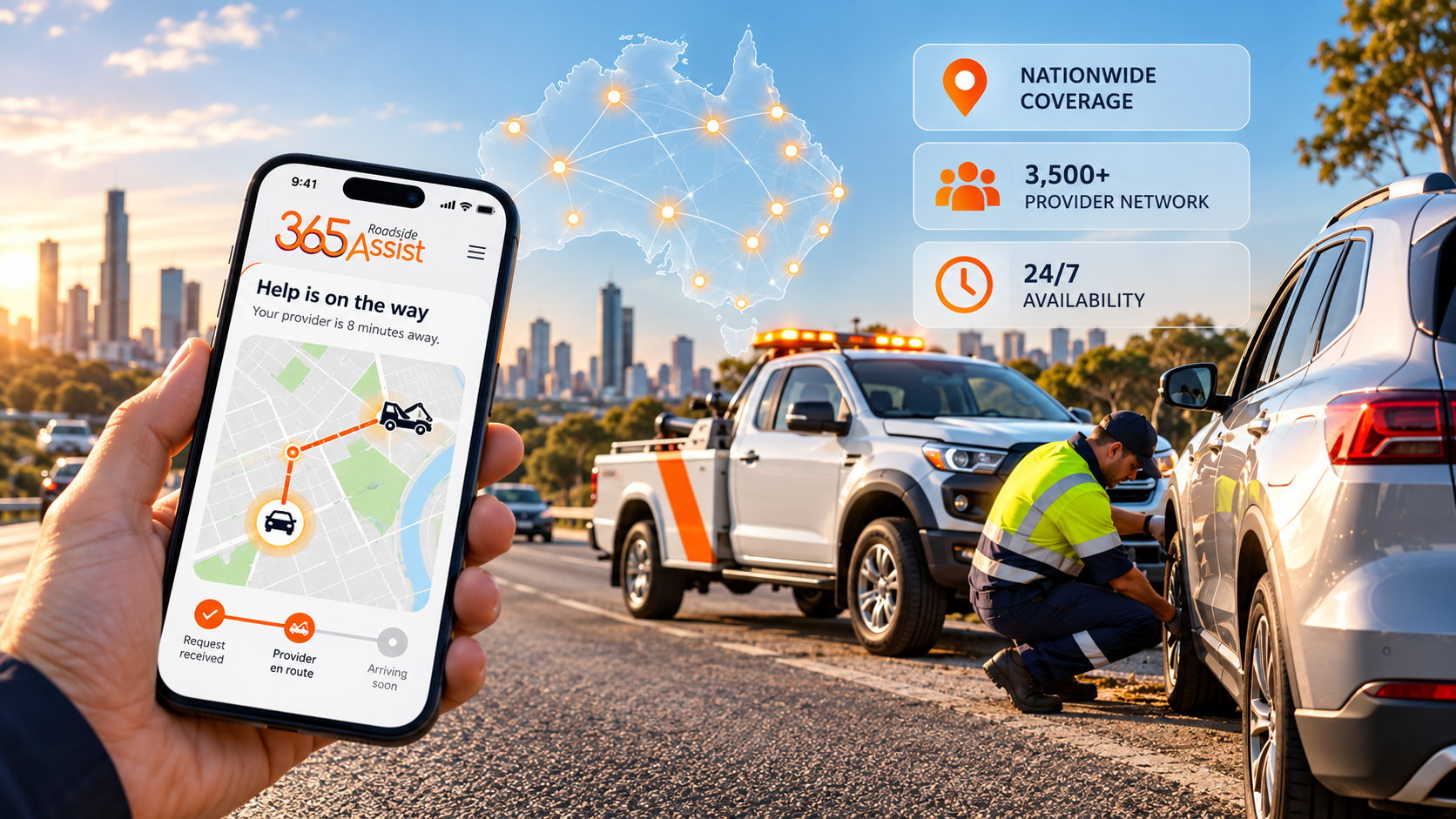
.png)

Discover the nine key trends shaping Australian fleet management in 2026, from AI and EV integration to driver safety and rising costs, and how strategic roadside assistance partnerships help fleets stay ahead.
If you're managing a fleet in Australia this year, you’ll have noticed that costs are rising, compliance obligations are tightening and customers expect more from every job. The good news is that none of this is out of your control.
Fleet managers who build strategic partnerships around day-to-day operations, not just roadside cover for when something breaks, are protecting their performance through it, because a great roadside assistance partner catches problems in maintenance, compliance and operational cost before they show up as downtime. Fleet News Group covers this directly, with insight from inside the industry on where the pressure lies.
This article breaks down the fleet management trends shaping operations in Australia this year, and what you can do about each one to protect performance and keep your business growing.
9 Key Trends Shaping Australian Fleet Management in 2026
Fleet management software and connected technology are growing in the market fast, as more owners look for new ways to streamline their operations. These are the fleet management industry trends hitting the market in 2026, and how 365 Roadside Assistance helps fleet managers respond to each one.

1. Agentic AI and AI-Powered Telematics
Fleet telematics has moved past GPS tracking. Agentic AI built into fleet tracking platforms now flags a failing part or a route issue before you check your dashboard. It’ll then recommend a fix instead of just reporting a fault.
365 Roadside Assistance uses agentic AI in our own dispatch and diagnostic process. Your drivers get a faster, more accurate assessment from the first call instead of explaining the fault twice. That cuts time on the side of the road and gets the vehicle back on the job sooner.
2. Data Analytics and Insight Capabilities
Data analytics only helps if someone can act on it. Many fleet management systems now produce more reports than a team has time to read, and useful insights can get lost in the volume. Turning raw data into a clear next step, on vehicle maintenance, fuel management or driver behaviour, genuinely helps streamline and improve operations.
365 Roadside Assistance’s reporting gives you conversational, QA-style access to breakdown trends, response times and vehicle performance data. You can then see a repeat fault across your fleet instead of finding out about it vehicle by vehicle. That level of fleet management technology turns a support call into a source of operational efficiency, because every callout adds to a record you can use for planning.

3. EV Fleet Integration Under Australia's New Vehicle Efficiency Standard
Australia's New Vehicle Efficiency Standard (NVES) is encouraging more operators to use electric vehicles. Many fleets now run petrol, diesel and electric vehicles side by side, and each fuel type needs different maintenance schedules, charging logistics and roadside protocols. It's a bigger job for a fleet manager, but it's a manageable one with the right support in place.
365 Roadside Assistance trains technicians across fuel types, including EV-specific jump-starting and towing. You get one point of contact regardless of what's in your fleet, so adding EVs doesn't mean adding a second provider, a second set of contracts or a second call centre number for drivers to remember.
4. Advanced Driver Safety and Wellbeing
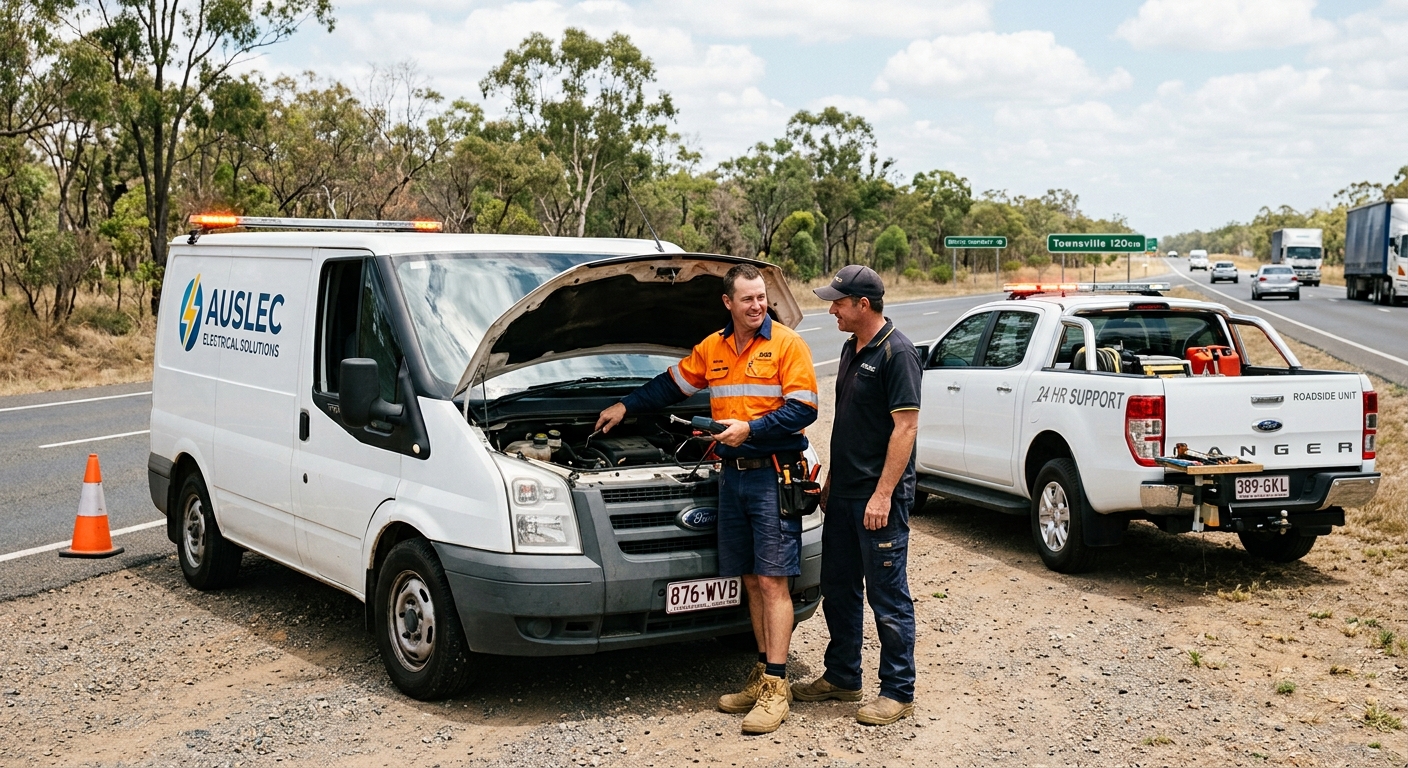
A tired or stressed driver poses a safety risk before a vehicle breaks down, especially when you’re dealing with challenging winter driving conditions. How your provider responds to an incident directly affects how safe your drivers feel on the road, and human-centric communication can reduce psychological stress following an accident.
Fast, accurate diagnosis shortens wait times and gets your drivers back on the road with minimal fuss. 365 Roadside Assistance’s mobilisation rate is sitting at 100%, and 93% of drivers are reached and attended to within 45 minutes of their first call. That combination is what keeps a roadside incident a manageable delay instead of a safety risk.
Article: Winter Driving in Australia: How to Prepare Your Car and Stay Safe
5. Predictive Maintenance as a Baseline Expectation, Not a Premium Feature
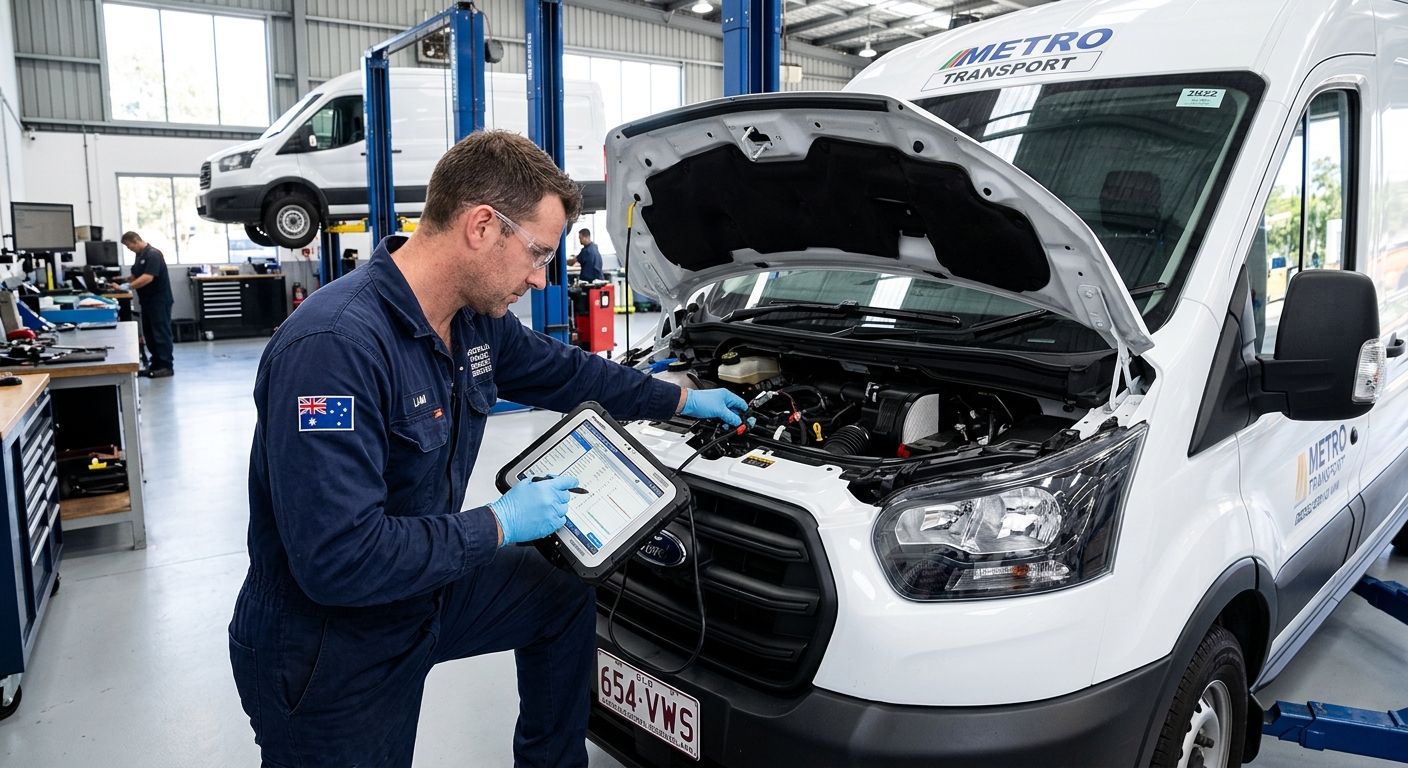
Predictive maintenance used to sit in a premium package. Fleet operators now expect it as standard. Predictive analytics run against vehicle diagnostics can flag a failing battery or slow leaking tyre before it causes a breakdown, which protects fleet costs through preventive maintenance.
365 Roadside Assistance backs this with data reports and vehicle diagnostics that give you QA-style visibility into recurring issues across your fleet. This means that when three vehicles fail the same way, you catch the pattern at vehicle two instead of vehicle five. You’ll also be able to set different service intervals based on vehicle usage.
6. Chain of Responsibility Compliance Obligations
Chain of Responsibility (COR) shows how fast fleet management rules can change. COR became a talking point for fleet operators around two decades ago and has only been law for roughly the last ten years, but it rewrote how heavy vehicle operators handle compliance. Responsibility no longer stops with the driver. It runs across the supply chain, from the person who scheduled the delivery to the business that received it.
It’s worth paying ongoing attention to as new rules come in. COR reshaped the fleet management model once. What's the next regulatory change, and what will it cost an operator who isn't ready for it? Fleet managers who build flexibility into compliance now will handle the next shift with less disruption.
7. Increased Pressure To Keep Operational Costs Low
Unplanned downtime, duplicate services and wasted fuel consumption are pushing operators toward fleet management solutions that cut spend rather than add another line item. Every dollar saved there is a dollar that can go back into growing your fleet.
That pressure is why more fleet operators are consolidating roadside assistance, diagnostics and reporting under one partner instead of managing several providers. One partner means one invoice, one data source and fewer gaps where unnoticed cost arises. It also means fewer handovers between providers when a vehicle is off the road, which is where downtime and cost usually stack up together.
8. Electronic Work Diaries for Heavy Vehicle Compliance
Electronic Work Diaries (EWDs) are replacing paper logbooks for heavy vehicle compliance, recording driver hours in real time instead of at the end of a shift. For a large or interstate fleet, that cuts the admin load and gives you a live view of driver behaviour and fatigue risk instead of a weekly catch-up.
As EWD adoption grows, your partners need to understand how compliance technology fits into daily fleet operations, not just what the software does on a spec sheet.
9. Cybersecurity as Fleets Become More Connected
Connected fleet technology brings genuine gains, but every device you add is also a potential entry point for malicious actors. Fleet tracking systems, telematics units and EWDs all generate and transmit data, and a compromised system can ground vehicles as fast as a mechanical fault. That puts cybersecurity on the fleet manager's desk, not just the IT team's.
Ask every technology and service partner, including your roadside assistance provider, exactly how your fleet data is stored, who can access it and what happens to it after a job is closed. If a provider can't answer clearly, that's a gap in your fleet's security, not just theirs.

Whether you’re checking the market to see what’s available or you’re facing challenges in your fleet management operations, here are a few signs that indicate a fleet might’ve outgrown its current roadside assistance provider.
If you have ticked one or more of these boxes, it might be time to seek a roadside assistance partner that addresses the challenges you’re facing head-on to keep your fleet running smoothly.
Choosing a roadside partner on price or proximity alone is unlikely to solve the challenges fleets face in their end-to-end service delivery. The qualities below protect your fleet's uptime, safety and cost control sustainably throughout your contract.
EV integration, tightening compliance and rising operational costs are adding real complexity to fleet management in Australia, and none of them are slowing down through 2026. Treating roadside assistance as a strategic partnership, rather than a fallback service, gives you the support to handle that complexity without it eating into fleet performance or your team's time.
If any of the trends or warning signs above sound familiar, 365 Roadside Assistance offers a suite of integrated, tech-first solutions and human-led services, customised to your fleet’s operational needs.
Contact the team today to talk through what a strategic roadside assistance partnership could look like for your fleet.